Times Played: > 10 (On Review Copy from the Publisher)
Silver Dagger is the fourth game in the hit Silver line of fast-playing card games designed by Ted Alspach. Silver Dagger was announced today and is planned for an October release. I received an early copy, and I’ve been playing it over and over with my game group and family.
Based on the system from Cabo, each game in the Silver series is a hand management and set collection card game with a werewolf-themed twist. Silver (a.k.a. Silver Amulet) and Silver Bullet were released last year, and Silver Coin was released earlier this year. The Silver line of games can be combined, so sort of like with Dominion, you can mix different sets to make custom decks.
Each game in the series features a different namesake relic, and as probably guessed, this one is a silver dagger, fashioned with Bezier’s signature werewolf head at the end of the metal component. In Dagger, gameplay can change direction for the first time, with players pointing the dagger in the direction the turns are taken.
Silver Dagger ups the complexity a bit from previous games in the line, but it also ups the strategy and opportunities for clever play. The art is more striking than ever. Previous fans of the Silver line will naturally love Dagger.
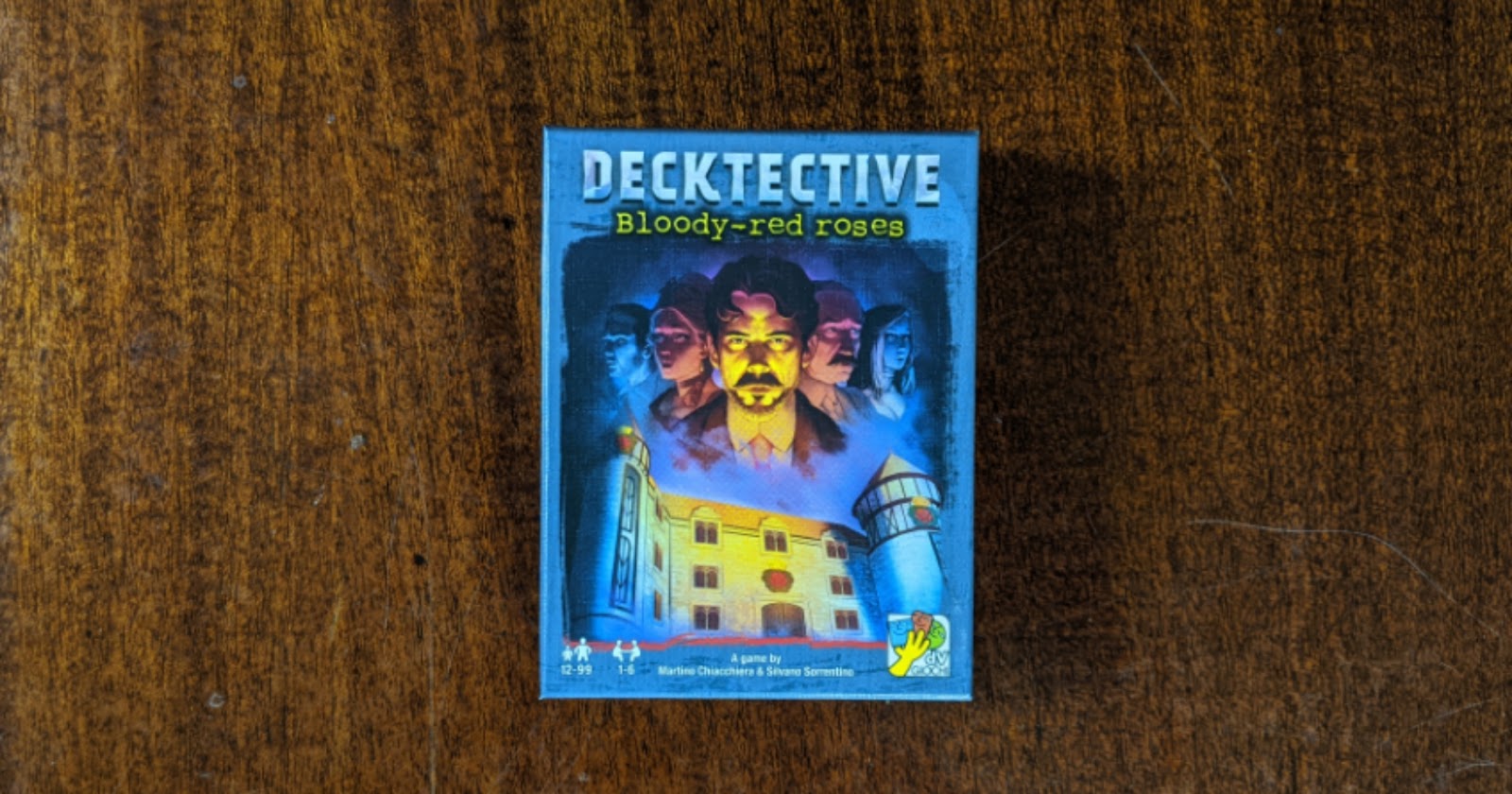
Designer: Martino Chiacchiera, Silvano Sorrentino Artist: Alberto Besi Publisher: dV Giochi Players: 1-6 Ages: 12+ Times Played: 1, on a copy I borrowed from Dale
Decktective is a sort of sibling line to dV Giochi’s Deckscape series. Whereas Deckscape presents the player(s) with a series of mostly self-contained puzzles with clear answers, the Decktective series pushes towards the mystery end of the puzzle niche, where players will take on the role of detectives solving some crime.
Rather than individual puzzles, most of your time will be spent observing evidence and considering the possible implications for all of your W questions. At the end, expect a series of Big Picture questions, that while not explicit before the end game, should likely be predictable (e.g. whose crime is this crime?)
A long time ago in a galaxy far, far away… well, not really. The galaxy was actually my local Toys’R’Us (which is now pushing up business daisies) where I purchased Hasbro’s movie tie-in board game: Star Wars: Epic Duels. The year was 2002 and George Lucas was busy failing us in a variety of different ways.
“I’m sorry, but I’m not going to watch the Clone Wars TV series until I’ve seen the Clone Wars movie. I prefer to let George Lucas disappoint me in the order he intended.”
C-3PO: I suggest a new strategy, R2. Let the Wookiee win.
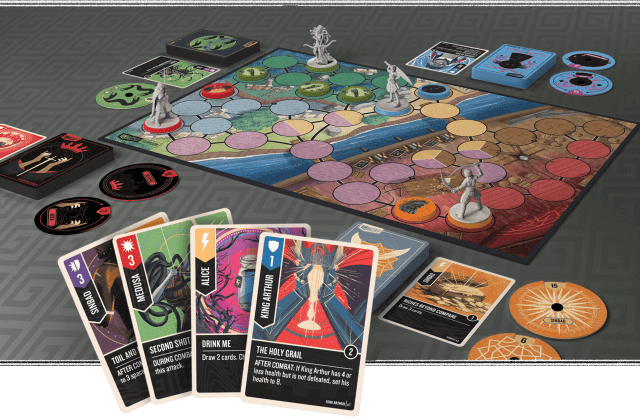
Epic Duels had a lot going for it in those days:
Painted miniatures of all the major Star Wars characters Episodes 1-2 and 4-6 (granted, they were pretty slapdash paint jobs, but they were better than anything I could do)
Individual combat decks for each character and his/her sidekicks that encouraged players to make similar choices to their characters… for example, Anakin’s deck gives the player lots of extra actions/attacks, while the Obi-Wan deck has a balance of movement, attack and defense
4 different boards to fight on – including the Imperial Throne Room and the carbonite freezing chamber
The price point was $20 – and even with the cardboard game boards and cheaply painted minis, it was a good deal.
The game itself was pretty simple – teams of players went into mortal combat with each other. Each turn, the active player rolled the movement die (which might allow only one of their characters to move or possibly all of them) and then took two actions: they could play a card, draw a card, or discard two cards of a dead character to heal 1 point.
I played a lot of Epic Duels over the years – 45 times, according to my records on BGG. For a while back in 2002, it was our go-to game every Saturday night with a bunch of friends from the church I pastored. (I do not recommend 6 player free-for-alls… the decks are not balanced or designed for such nonsense.)
I’m the first to tell you that the game has not aged well – neither the quality of the minis or the problems with the design leave much to recommend it. We tried again last summer with a 2 vs 2 team match and actually called the game before it ended. (And if anyone is looking to trade/buy a lovingly used copy, mine is available.) Too many of the decks require a player to “turtle” for multiple turns to build up enough cards – which was exacerbated by drawing a card taking one of your two actions per turn. The sidekicks vary wildly in usefulness – which, while thematically correct (Chewie with a crossbow blaster is certainly more help than a couple of Episode 1 battle droids), is not very enjoyable from a play perspective. The simple square movement grid combined with the randomness of the movement die could frustrate even the best-laid plans.
At the same time, there were some wonderful ideas buried in the design – the individual decks tied to character and fighting style, the bluff/counter-bluff attack & defense system, and the fast-playing nature of each turn. Epic Duels felt “right”… until it didn’t, as other card-based fighting games innovated in new ways.
I first played Race for the Galaxy many years ago when a friend had a demo copy. It was an immediate success with me and I was desperate to obtain a retail copy when it became available. I loved the simultaneous decisions and how the actions play out as you build your tableau of cards.
Like many people who played Race for the Galaxy as a card game, I moved onto the app. The benefits were immediate: the iconography that can be off putting was suddenly easy to see; you could use your mouse or finger to find out what icons and cards meant while the AI opponents provided a sufficient balance of challenge and interest because you could set the AI’s level for each of the four opponents. Games were speedy to play and you can test different plans by choosing which actions you want to experiment with and combine card strategies. You could also play online against other human players. My own experience is that this is great with your friends but can be frustrating with players who don’t play as fast as you would like. Nonetheless it’s a great feature.
This is the July and August entry for my series where I post five games I enjoyed playing in the past month for which I didn’t have time to do full reviews. As always, there’s a combination of old and new games.
My most played game is Istanbul: The Dice Game, which I had heard good things about when it was released, but which I personally never played.
But overall, both months were down months in terms of game plays. Things did pick up at the end of July, as I started getting more and more new games in due to a break in the Kickstarter backlog!
Times played: 4, with review copy provided by Pandasaurus
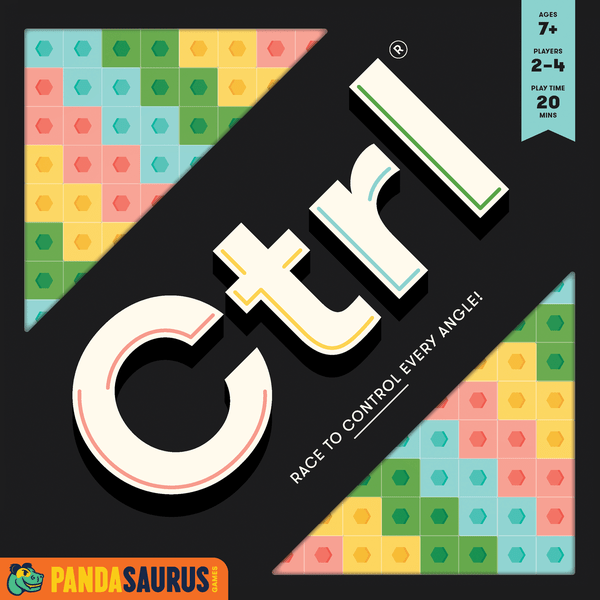
Ctrl is a pastel colored abstract area control game – all fought over a black central cube. The game starts with a 3×3×3 cube that has one block of each player color stuck into one of the cube’s holes. Each player has a matching colored flag that sticks out of their block. The rules have some 2D diagrams/photos to show you where to put them… In a two-player game, each player controls two colors, but at the start of play they secretly choose one of those colors to be their scoring color, with the other color serving only as a blocking mechanism. Each player gets a card to remind them of their color and takes the rest of the blocks in their color – there should be 21 of these. The starting cube, and all other cubes attached to it, form the Battlefield. The Battlefield can be freely rotated on the table, but it can never be lifted from the table (i.e. the bottom of the cube always remains the bottom, and nothing can ever be attached to the bottom).
The goal of the game is to have the largest Domain on the Battlefield – and this is measured by counting the number of exposed faces on the Battlefield at the end of the game; that is what all players have placed all of their blocks.






Chris Wray: What I Enjoyed Playing in July & August 2020
This is the July and August entry for my series where I post five games I enjoyed playing in the past month for which I didn’t have time to do full reviews. As always, there’s a combination of old and new games.
My most played game is Istanbul: The Dice Game, which I had heard good things about when it was released, but which I personally never played.
But overall, both months were down months in terms of game plays. Things did pick up at the end of July, as I started getting more and more new games in due to a break in the Kickstarter backlog!
Continue reading →Share this:
Like this: