
As always, it was great to be back in Essen, which is even bigger this year, occupying the entirety of Halls 1-8. Apparently sold out for the weekend despite the increased capacity, the crowds were certainly there and there was plenty of spectacle as well as plenty of delicious new games on display.
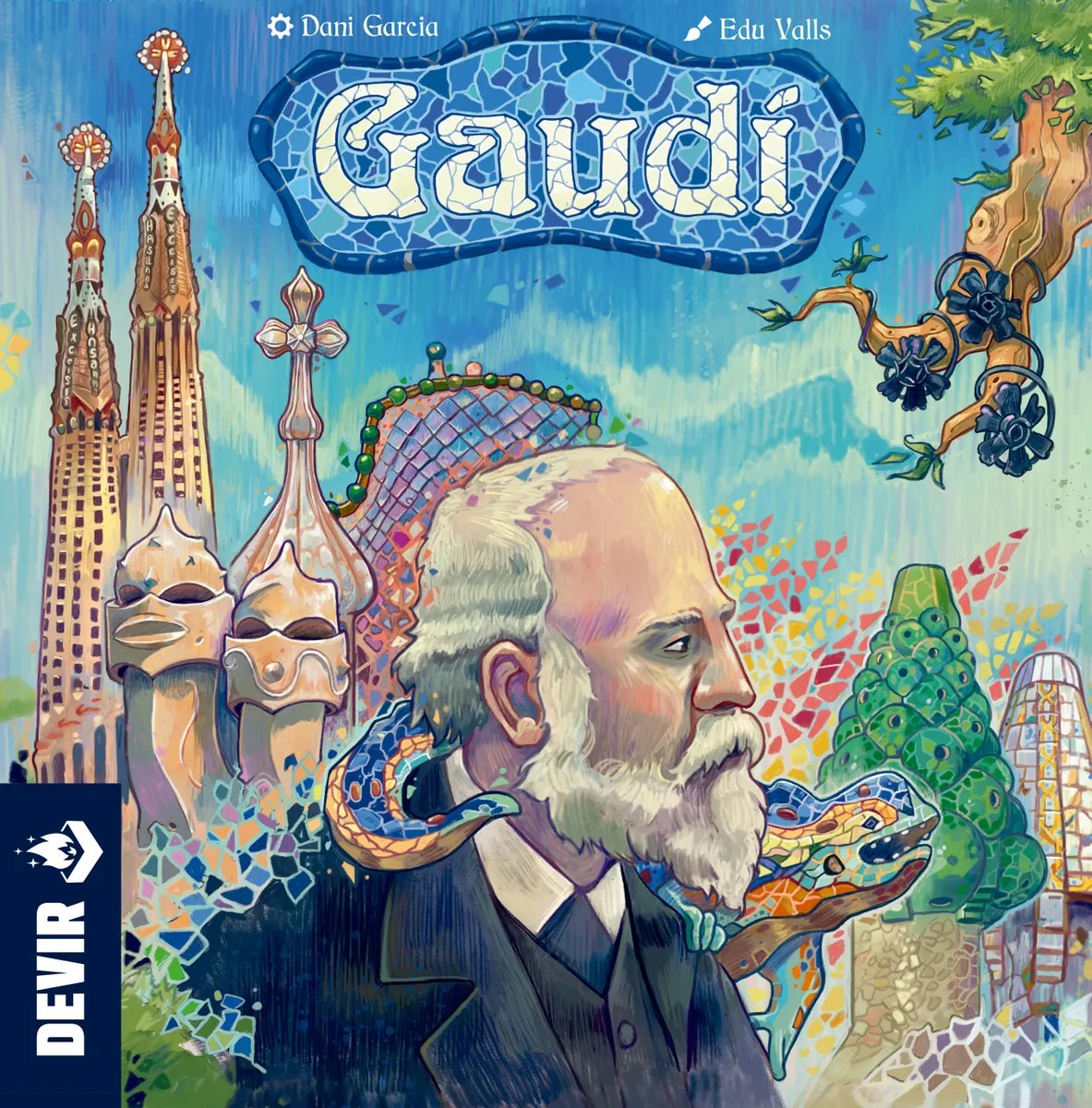
I had limited time today due to meetings, but did manage to try out Gaudi, Devir’s ;latest principal game. Crowds were lining up to buy it, and Devir had plenty of tables out to try the game if you weren’t yet convinced. Gaudi has a great theme in which you are trying to gain points in the artist’s 3 main aread of activity: Nature, Catalonia, and Religion. During the game you move your counter around a rondel, with the twist that when you have gone all the way round the rondel you must trigger the end of the round.
In addition, the person who is in front of the rondel gets to do two actions on the space they choose, whereas if you choose to lag behind you only get one action, but will perhaps get extra turns after everyone else has gone round. Your actions consist of selecting tiles, taking cards, or moving up the chimneys on your player board. The pretty tiles you take are similar to those used by Gaudi in one of 4 different shapes and 3 different colours, and you placie these tiles when taken on your player board in a display,.
The challenge here is to get the correct shapes or colours needed to play cards (more about that later). In addition, the groups of tiles themselves will be scored at the end of the game: the largest group of tiles scores 0, and the second and third largest score a point per tile you have placed – so you have an interesting spatial puzzle to solve.


, These symbols correspond to bamboo stick length, panda weight, and panda height respectively. As soon as the die is rolled, all players grab a card from the circle – quickly – which they think corresponds to, for example, the panda holding the biggest bamboo stick. Then players look at the front of the card and read out the actual measurement of the stick (for example) and the one which is largest (in this case) wins the round and keeps their card. The game is fast and fun as you try to guess from maybe not much picture visible whether this panda is fat or thin, for example. As the game goes on, lower cards are exposed and funny things happen eg grabbing a random panda you cannot really see and finding you have won with it! The game ends when one player wins 8 cards. It’s a classic example of a very short teach game which is fun for all kinds of gamers, and I would recommend it.


